Choosing a playpen or play yard: sizes and safety
A playpen with its own floor, a mesh playpen or a large play yard on the floor: the differences, the sizes and the rules for walls, bars and base.
Playpen, mesh playpen or play yard
A classic playpen has its own base, often adjustable in height. A playpen with bars is usually wooden; your child can pull up on the bars. A mesh playpen has fabric mesh walls and is often light and foldable, like the Chicco Open Park. The Born Lucky Cubo is a 100 by 80 centimetre playpen with an adjustable base.
A play yard has no base of its own. It is a fence of panels that you set on the floor, with a play mat inside, and the NVWA names this as the difference with an ordinary playpen. A travel cot looks similar but is made for sleeping.

Which size fits
Measure the space first. A playpen with a base is often about a metre wide. Play yards come much larger: the Safetots play yard is 144 by 144 centimetres, the Lionelo Florence Easy Fold XL 180 by 200 centimetres and the Lionelo Willow XL 187 by 207 centimetres, with a matching play mat.
A large play yard gives a crawling baby more room, but also takes up a good part of the room. Check whether it folds away when not in use, whether it has a door and whether the maker says it may stand outdoors.
The standard and what the NVWA found
Playpens for the home fall under the European standard EN 12227. It sets requirements for stability, wall height, openings and protruding parts. According to the NVWA, the wall of a play yard must be at least 60 centimetres high, so a child can’t climb over it.
In 2025 the NVWA examined 20 play yards and found shortcomings in 11: often a wall that was too low, but also unstable walls, places to climb, protruding parts and wrong spacing between the bars. The NVWA advises asking whether a play yard was tested to the European requirements, and checking yourself whether your child can climb and whether the door closes child-safely.
Bars, mesh and base
VeiligheidNL gives concrete sizes. The gap between the bars of a playpen is 4.5 to 6.5 centimetres, and the holes in the mesh of a mesh playpen are no larger than 0.7 centimetres. An adjustable base sits at least 30 centimetres below the rim in its highest position and at least 60 centimetres in its lowest. A lock or door opens with two actions at once.
Use a playpen mat that fits well and never put an extra mattress in the playpen. A child can get trapped between the mattress and the side.
Where to put the playpen
Don’t put the playpen too close to a radiator, houseplants or cords and strings, for example from curtains. Don’t tie toys to strings in the playpen and hang a mobile out of your child’s reach. Don’t put too many large toys in it either: your child can stand on them and climb out.
A playpen is made for playing. Where your baby sleeps most safely is in our guide to crib, bedside crib or cot, and something to discuss with your health visitor (the consultatiebureau or Kind en Gezin).

Common questions
What is the difference between a playpen and a play yard?
A playpen has its own base, often adjustable in height. A play yard is a fence of separate panels that stands directly on the floor, usually with a play mat, and comes in much larger sizes.
How high must the wall of a play yard be?
At least 60 centimetres, according to the NVWA, which refers to the EN 12227 standard. In a 2025 inspection a wall that was too low was the shortcoming the NVWA found most often.
Can I put a mattress in the playpen?
Use a playpen mat that fits well. VeiligheidNL advises against an extra mattress in the playpen, because your child can get trapped between the mattress and the side.
Keep looking
LeBaby doesn’t test products. This guide sets out what the standards and manufacturers say. Always follow the manual of your own product.
Products from this guide
Popular products with a current price at the shops. Compare the prices on the product page.
- Maxi-Cosi
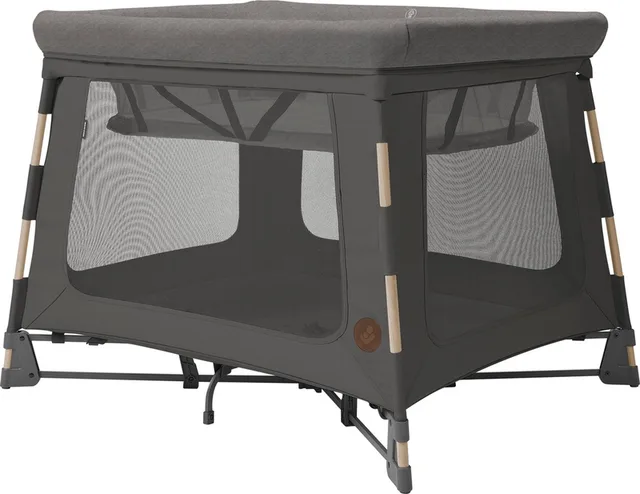
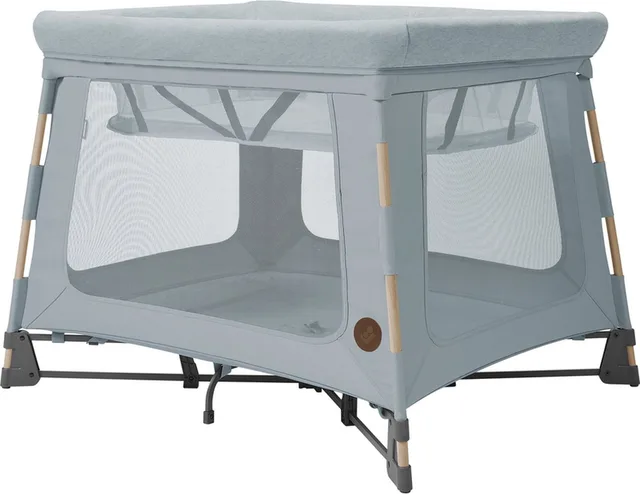
Swift 3-in-1 campingbedje
Eco€248.48 · 1 offer
- Aerosleep
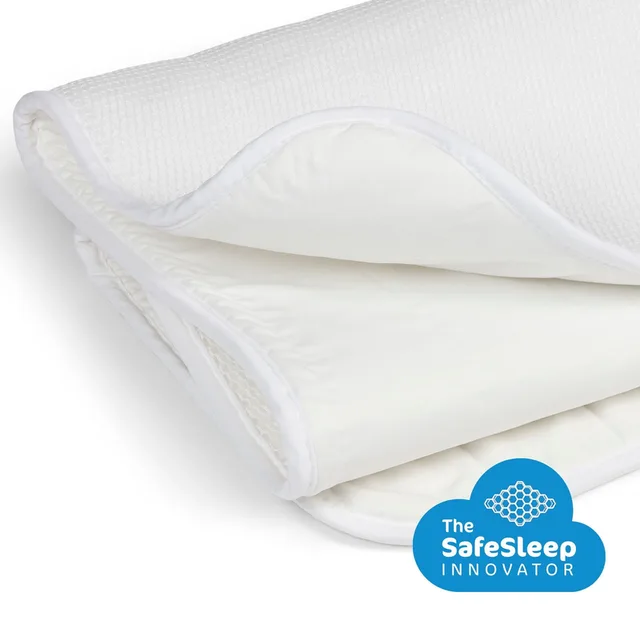
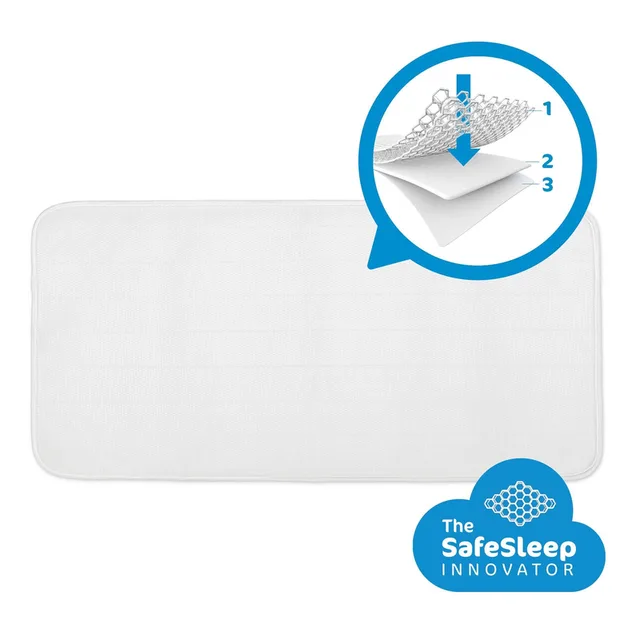
Topper Campingbed Aerosleep
60x110 Protect€76.98 · 1 offer
- Bugaboo
Baumwoll-Spannbetttuch für Reisebett Stardust
€30.98 · 1 offer
- Joie
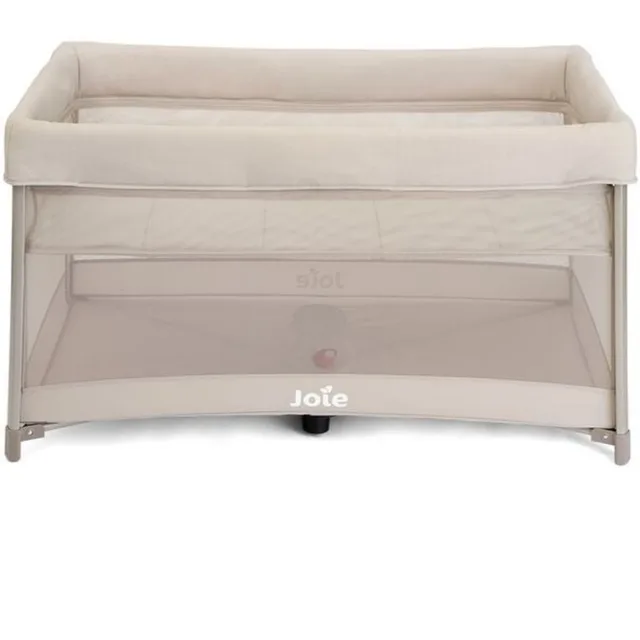
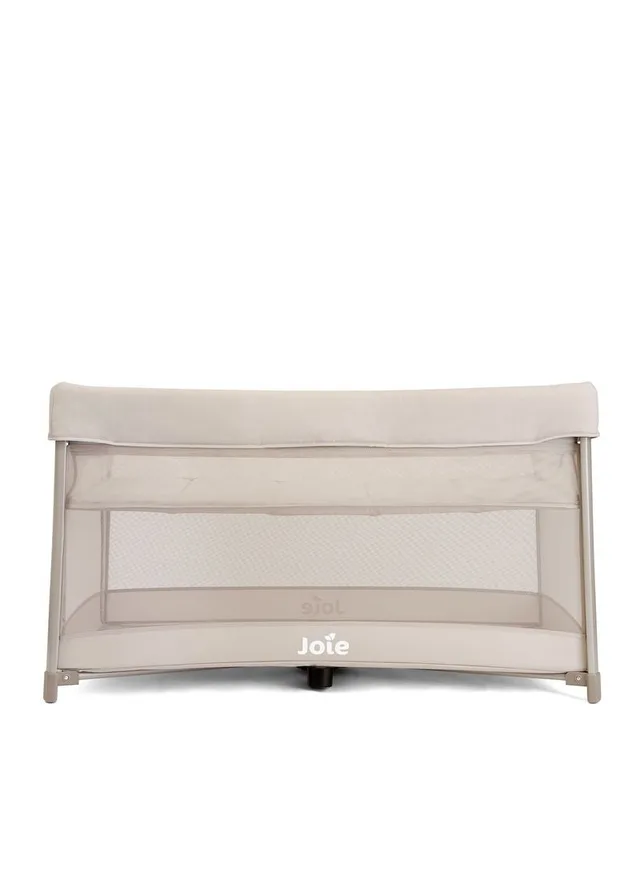
Amigo Reisbedje Vanilla
€157.45 · 1 offer
More guides
- How to choose a pram Travel system, 3-in-1 or straight to a pushchair? What to look for in the type, the lying position, the fold and your own daily routes. Read the guide
- i-Size explained What the car-seat standard i-Size (UN R129) means, how the height classes work and why your baby rides rear-facing for longer. Read the guide
- Crib, bedside crib or cot? The difference between a crib, a bedside crib and a cot, which sizes are common and when your baby outgrows them according to the manufacturer. Read the guide

- Guide New baby gifts and baby's first Christmas: what to give
- Guide Which car seat for which height and age?
- Guide Choosing a baby monitor: audio, video or app?
- Guide Baby carrier or wrap: what to look for
- Guide Choosing a highchair: classic, adjustable or compact
- Guide Choosing baby bottles and teats
- Guide Choosing a breast pump: manual or electric?
- Guide Choosing a baby bouncer: types and safe use